

Sales training is no longer a generic checkbox for corporate development. It is a strategic lever for revenue growth. According to recent industry data, organizations that invest in structured sales enablement see an average revenue growth of 28% compared to those that do not. However, the method of delivery matters just as much as the content. Choosing between in-house and open sales training programmes determines whether your team learns in a vacuum or in a competitive, collaborative environment. This guide breaks down the operational differences, cost implications, and specific challenges each model solves for modern B2B and B2C sales teams. (Other Core Services Impel)
Defining the Models: In-House vs Open Training
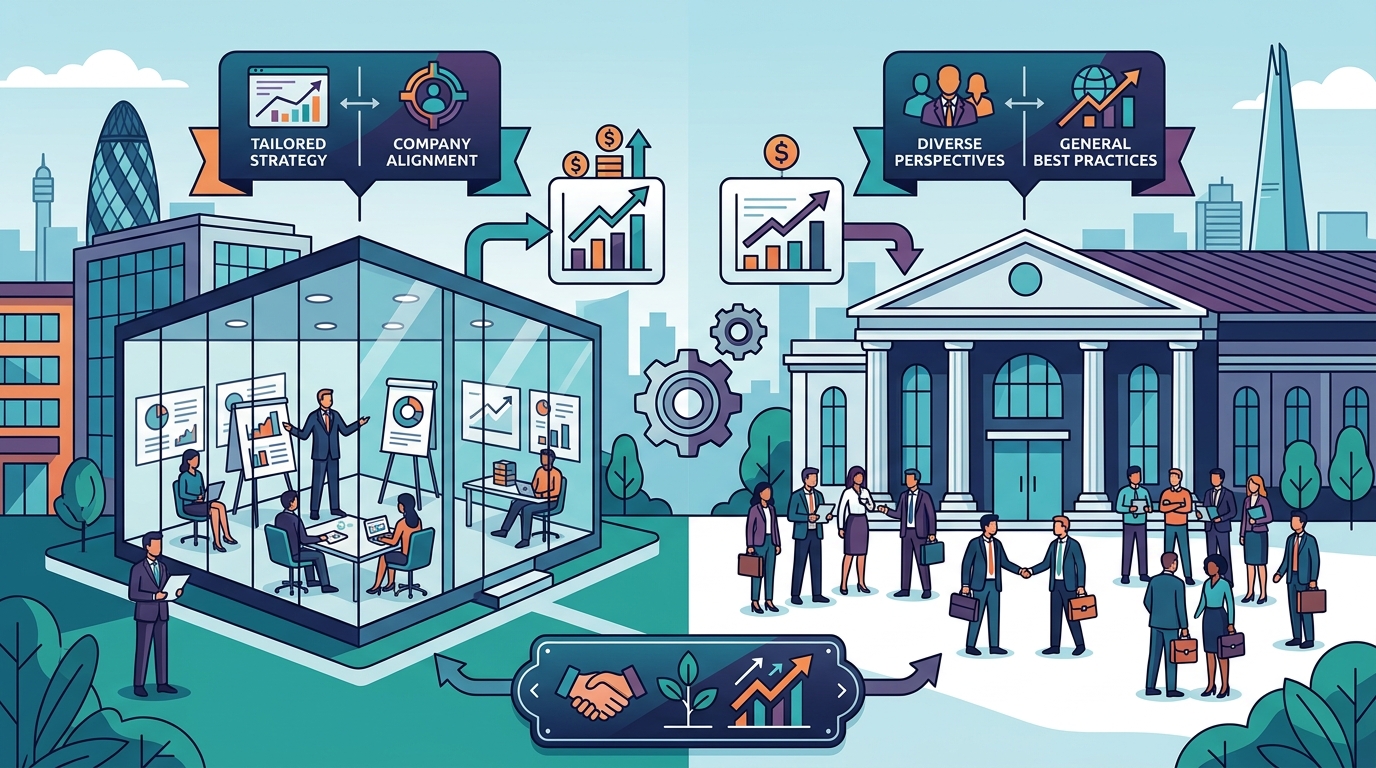
To make an informed decision, we must first establish clear definitions for both approaches. In-house sales training is a bespoke programme delivered exclusively for a single organization, tailored to their specific products, market, and sales methodology. Open sales training is a pre-designed course where individuals from various companies attend together to learn standardized sales skills in a shared learning environment.
The core distinction lies in customization versus standardization. In-house training addresses unique organizational silos and specific pipeline bottlenecks. Open training provides a broader perspective, exposing participants to cross-industry best practices and peer-to-peer networking opportunities. Understanding these definitions is the first step in aligning your training strategy with your business goals.
The Strategic Advantage of In-House Training
In-house training is often the preferred choice for established organizations with complex sales cycles. When your sales team deals with high-value B2B contracts, generic advice rarely suffices. They need strategies that map directly to their existing CRM workflows and stakeholder maps.
1. Immediate Applicability and Context
The primary benefit of in-house training is relevance. Trainers can use your actual case studies, objection handling scripts, and competitive intelligence during the session. This means your team can apply new techniques to live deals immediately. According to data from sales enablement research, tailored training programs result in a 6X average ROI because the learning is directly tied to current revenue activities. This approach eliminates the "translation gap" where employees struggle to adapt generic concepts to their specific role.
2. Cultural Alignment and Team Cohesion
In-house programmes allow you to reinforce your unique company culture and values. You can address specific behavioral issues, such as poor follow-up discipline or inconsistent messaging, without the distraction of external participants. This creates a safe space for your team to critique internal processes openly. It also fosters stronger team cohesion, as colleagues learn together and build a shared language for success.
3. Addressing Specific Pipeline Bottlenecks
If your team is struggling with a specific stage of the funnel, such as closing or negotiation, in-house training can target that exact weakness. For example, if your salespeople are losing deals to competitors on price, a bespoke programme can focus entirely on value-based selling techniques. This precision is difficult to achieve in a generalist setting.
Why Open Courses Drive Peer Learning
Open sales training courses offer a different set of advantages, particularly for individuals or small teams looking to broaden their horizons. These courses are designed to be engaging and effective, bringing together like-minded professionals from various industries.
1. Cross-Industry Perspective and Benchmarking
One of the most significant benefits of open training is exposure to diverse perspectives. Participants learn not only from the instructor but also from peers in different sectors. This cross-pollination of ideas can spark innovation. For instance, a salesperson in manufacturing might learn a networking technique from a colleague in tech that revolutionizes their approach. This benchmarking allows individuals to see how their peers handle similar challenges, providing a reality check on their own performance.
2. Cost-Effectiveness for Individuals
For individual contributors or small startups, open courses are significantly more cost-effective than commissioning a bespoke programme. The cost is shared among all attendees, making high-quality training accessible. This model is ideal for professionals who want to upgrade their skills without the logistical burden of organizing an internal event.
3. Networking and Professional Growth
Open courses provide a valuable networking opportunity. Participants connect with other sales professionals, creating a support network that extends beyond the training session. This can lead to future collaborations, job opportunities, or simply a sounding board for ideas. The social aspect of learning can also increase engagement and retention of material.
Cost, Time, and ROI Comparison
Choosing between in-house and open training requires a clear understanding of the trade-offs. The table below summarizes the key differences to help you evaluate which model fits your current needs.
| Criteria | In-House Training | Open Sales Training |
|---|---|---|
| Customization | 100% Bespoke to your business | Standardized curriculum |
| Target Audience | Entire team or specific department | Individuals or small groups |
| Cost Structure | Higher upfront investment | Lower per-person cost |
| Networking | Internal team bonding | External industry connections |
| Best For | Complex sales cycles, cultural alignment | Skill upskilling, benchmarking |
Key Takeaways for Decision Makers
- ROI Potential: In-house training has been shown to deliver a 6X average ROI due to its direct applicability to current sales challenges.
- Client Satisfaction: Organizations using tailored sales programmes report a 99% client satisfaction rate with the training provider.
- Speed to Impact: In-house training allows for immediate application of techniques to live deals, reducing the time to revenue impact.
- Scalability: Open courses are ideal for scaling individual skills across a company without the logistical overhead of multiple bespoke sessions.
- Content Relevance: In-house training uses your specific data and case studies, ensuring 100% relevance to your market.
- Peer Learning: Open training provides unique insights from cross-industry peers, fostering innovation and benchmarking.
- Flexibility: Both models can be delivered virtually or in-person, offering flexibility for distributed teams.
Frequently Asked Questions
Which is better for a new sales team?
For a new sales team, in-house training is often more effective. It allows you to instill your specific methodology and culture from day one, ensuring everyone is aligned with your company's goals and processes.
Can open sales training be delivered virtually?
Yes, open sales training can be delivered virtually. Many providers offer online courses that replicate the engagement and networking opportunities of in-person sessions, making them accessible to global teams.
How do I calculate the ROI of sales training?
Calculate ROI by comparing the cost of the training against the increase in revenue generated by the trained team. Track metrics such as win rates, average deal size, and sales cycle length before and after the training.
Is in-house training more expensive?
In-house training typically has a higher upfront cost because it is customized to your specific needs. However, the return on investment is often higher due to the direct applicability of the content to your business.
What if I have a small team?
If you have a small team, open training might be more cost-effective. It allows your team members to benefit from high-quality training without the full cost of a bespoke programme, while also providing networking opportunities.
How long does in-house training take?
In-house training programmes can range from one-day workshops to multi-month bespoke programmes. The duration depends on the complexity of the sales process and the specific goals of the training.
Can I combine both approaches?
Absolutely. Many organizations use a blended approach. They might use in-house training for core methodology and open courses for specialized skills or individual development.
Next Steps for Your Sales Team
Choosing the right training model is a critical decision that impacts your revenue potential. Whether you need the precision of bespoke sales programmes or the breadth of open sales courses, Impel Dynamic provides the expertise to drive results. With over 25 years of experience and a proven method for accelerating sales growth, we help organizations win more business and build scalable sales processes. Book a call today to discuss your specific challenges and discover how our tailored solutions can transform your sales performance.