

The best sales training consultancies in the UK are those that combine proven, industry-specific methodologies with measurable ROI and flexible delivery models. This guide covers how to evaluate providers, verify credentials, understand pricing, and select the right partner for your team's growth.
How to Choose a Sales Training Consultancy
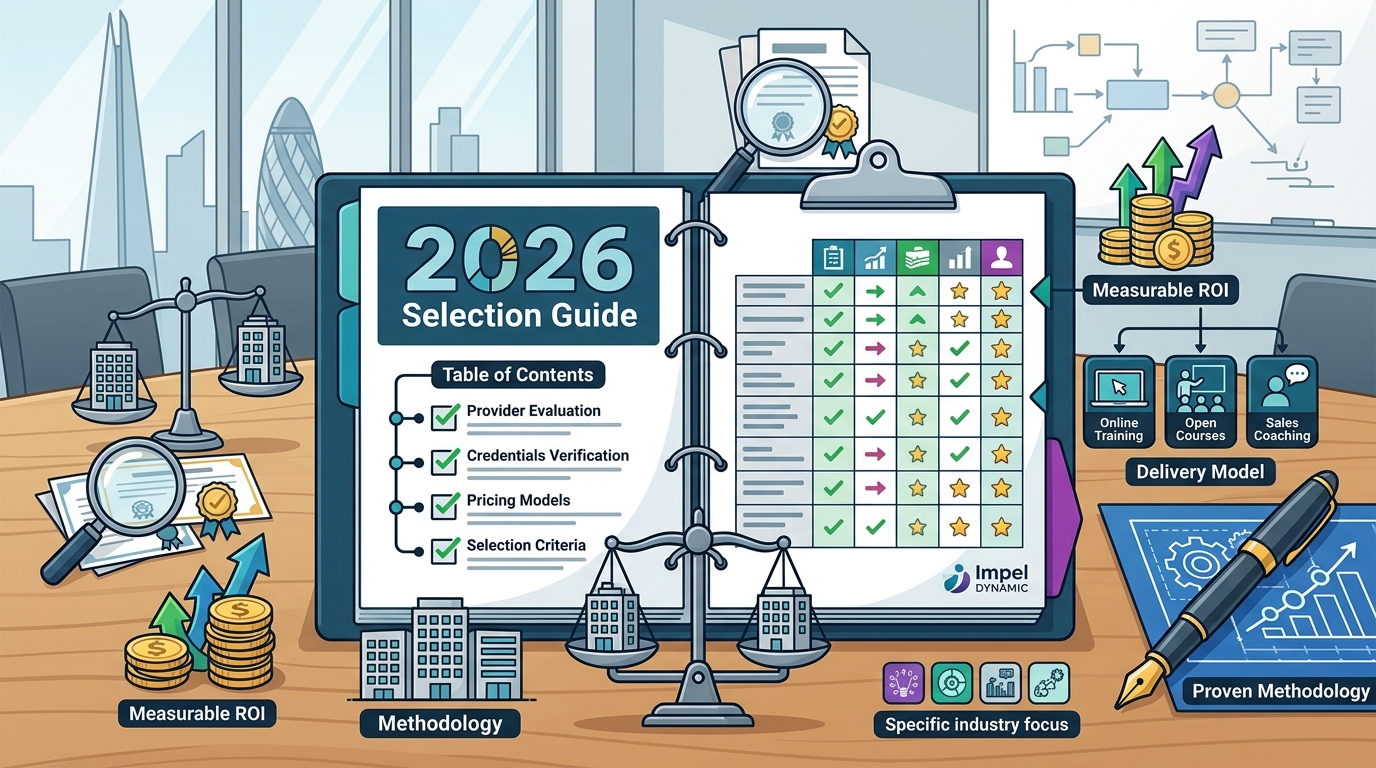
Sales training consultancy is a professional service that designs and delivers customized learning programs to improve a sales team's performance and strategic alignment. Selecting the right provider requires looking beyond generic course catalogs. You must assess whether the firm understands your specific industry, such as legal, financial, or technology sectors. A top-tier consultancy does not just teach tactics; it builds a sustainable sales culture.
Methodology Depth
Look for providers with a defined, repeatable methodology. Impel Dynamic, for example, utilizes a "Prepare, Deliver, Follow-Up" approach that ensures training is not a one-off event but a continuous improvement cycle. This structure helps organizations standardize sales behavior across different regions and teams.
Trainer Credibility
The expertise of the trainers is the most critical factor. Verify that the consultants have recent, hands-on experience in high-level sales and management roles. Trainers who remain active in business development bring current market insights to the classroom, ensuring the content is relevant to today's buyer behavior.
Customization Capability
Off-the-shelf courses rarely address the unique challenges of a specific company. A strong consultancy will conduct a pre-training assessment to tailor the curriculum to your team's current skill level and specific pain points. This bespoke approach maximizes the return on investment by focusing on the gaps that actually impact revenue.
Questions to Ask Before Committing
Before signing a contract, you must interrogate the provider's process and outcomes. Asking the right questions reveals whether a consultancy is a strategic partner or just a vendor selling seats.
Diagnostic and Assessment Questions
Ask how they assess your team's current capabilities. Do they use psychometric tools or client audits? Understanding their diagnostic process ensures the training is based on data rather than assumptions. For instance, Impel Dynamic offers leadership assessments and client audits to identify specific areas for improvement before training begins.
ROI and Measurement Questions
Inquire about how they measure success. Do they track KPIs like win rates, quota attainment, or average deal value post-training? A reputable firm will provide a clear framework for monitoring progress and adjusting the program as needed. Ask for case studies that demonstrate tangible financial results for clients in your industry.
Delivery and Flexibility Questions
Determine the delivery methods available. Does the provider offer face-to-face, virtual, or blended models? In the current hybrid work environment, flexibility is essential. Ensure the provider can adapt to your team's location and schedule without compromising the quality of the interaction.
Verifying Credentials and Claims
The sales training market is crowded with providers making bold claims. Verifying these credentials is essential to avoid investing in ineffective programs.
Check Industry Experience
Verify the specific industry experience of the trainers. A trainer who has sold software for ten years may not be the right fit for a legal firm. Ask for references from clients in your specific vertical. Impel Dynamic, for example, specializes in professional service firms, including legal, financial, and insurance sectors, which is a specific credential to verify if you operate in those fields.
Validate Methodology
Request a detailed overview of their methodology. Is it proprietary or based on established frameworks? Understanding the theoretical underpinning of the training helps you gauge its depth. Look for providers who can explain the "why" behind their techniques, not just the "what."
Review Client Testimonials
Look for detailed case studies rather than vague testimonials. Specific metrics, such as percentage increases in conversion rates or revenue growth, are more valuable than general praise. Check if the provider offers ongoing support or if the relationship ends after the training day.
The Training Process and Timeline
Understanding the operational workflow of a sales training consultancy helps you plan for the disruption and commitment required.
Phase 1: Preparation and Assessment
The process typically begins with a discovery phase. Consultants will interview key stakeholders and analyze sales data to identify gaps. This phase may involve pre-training questionnaires or client audits. The goal is to create a customized learning plan that addresses specific behavioral changes.
Phase 2: Delivery and Engagement
Training is delivered through workshops, coaching sessions, or simulations. The duration varies from one-day open courses to multi-week bespoke programs. During this phase, participants practice new skills in a safe environment. The focus is on immediate application, with participants bringing real-world challenges to the sessions.
Phase 3: Follow-Up and Reinforcement
Effective training does not end when the workshop does. The follow-up phase involves coaching, review sessions, and monitoring KPIs. This ensures that new behaviors are embedded in the daily routine. Impel Dynamic's methodology emphasizes this follow-up to sustain the changes and drive long-term results.
Pricing Factors and Cost Drivers
Sales training costs vary significantly based on scope, duration, and customization. Understanding these drivers helps you budget effectively.
Open Courses vs. Bespoke Programs
Open courses are generally more affordable as the cost is shared among multiple organizations. They are suitable for individual skill development. Bespoke in-house programs are more expensive because they are tailored to a single company's needs. The price reflects the time spent on customization and the exclusivity of the content.
Delivery Model Impact
Face-to-face training often costs more due to travel and venue expenses. Virtual training can be more cost-effective and allows for broader reach. Blended models combine both, offering a balance of cost and engagement. The choice of delivery model should align with your team's location and learning preferences.
Scope and Duration
The length of the program directly impacts cost. A one-day workshop is less expensive than a multi-day intensive or a long-term development academy. The scope of the training, such as the number of participants and the depth of the curriculum, also plays a role. Larger groups may benefit from volume discounts, while smaller groups may pay a premium for personalized attention.
Common Mistakes to Avoid
Organizations often make critical errors when selecting and implementing sales training. Avoiding these pitfalls ensures a better outcome.
Choosing Based on Price Alone
Selecting the cheapest option often leads to generic content that fails to address specific business challenges. Low-cost providers may lack the expertise or resources to deliver high-impact training. Focus on value and potential ROI rather than just the upfront cost.
Lack of Management Buy-In
Training fails if managers do not reinforce the new behaviors. Leadership must be involved in the process and committed to supporting the changes. Without top-down support, participants may revert to old habits. Ensure that your leadership team is aligned with the training objectives.
Ignoring Follow-Up
Many organizations treat training as a one-off event. Without ongoing coaching and reinforcement, the skills learned are quickly forgotten. Invest in providers who offer follow-up support and continuous development plans to ensure long-term retention of new skills.
Consultancies vs. Alternatives
There are several alternatives to hiring a specialized sales training consultancy. Understanding the pros and cons of each helps you make an informed decision.
| Option | Pros | Cons |
|---|---|---|
| Internal Training | Low cost, deep company knowledge | Lacks external perspective, may not be up-to-date |
| Online Courses | Flexible, scalable, low cost | Low engagement, lacks personalization |
| Specialized Consultancy | Highly customized, expert-led, measurable ROI | Higher upfront cost, requires commitment |
Internal training is effective for reinforcing existing processes but may lack the fresh perspective of an external expert. Online courses are convenient but often lack the interactive elements necessary for behavioral change. Specialized consultancies offer the highest level of customization and expertise, making them ideal for organizations seeking significant transformation.
Tailoring for Specific Business Scenarios
The best sales training approach depends on your specific business context. Different scenarios require different solutions.
Scaling a Growing Organization
If you are scaling rapidly, consistency is key. You need a methodology that can be standardized across new hires and regions. Leadership coaching becomes crucial to ensure managers can replicate the sales process effectively. Impel Dynamic's focus on standardizing sales methodology is particularly relevant for growing organizations.
Entering New Markets
When entering a new market, your team needs to understand local buyer behavior and competitive dynamics. Training should focus on market-specific strategies and cultural nuances. A consultancy with experience in your target market can provide valuable insights and accelerate your entry.
Revitalizing a Stagnant Team
If your team is underperforming, you need a diagnostic approach to identify the root causes. This may involve leadership assessment, client audits, or mystery shopping. The training should then address the specific gaps, whether they are in skills, motivation, or process. A tailored program can re-energize the team and drive performance improvements.
Regulatory Rules and Protections
While sales training is not heavily regulated, there are important rules and protections to consider.
Data Protection and GDPR
Training providers will collect personal data from your employees. Ensure they comply with GDPR and data protection laws. Check their privacy policy to understand how they handle and store this data. Impel Dynamic, for example, is committed to safeguarding personal information and uses GDPR-compliant systems for data processing.
Contractual Protections
Review the contract carefully to understand the scope of services, deliverables, and payment terms. Ensure there are clear provisions for cancellation and refunds. Look for service level agreements that guarantee specific outcomes or support levels. This protects your investment and ensures accountability.
Intellectual Property
Clarify who owns the intellectual property of the training materials. If the provider creates bespoke content for your company, you should have the right to use it internally. Ensure the contract specifies the licensing terms for any proprietary frameworks or tools provided.
London and UK Regional Specifics
The UK, and particularly London, has a unique sales training landscape. Understanding local specifics can help you choose the right provider.
London's Competitive Hub
London is one of the world's most competitive commercial hubs. Sales teams here face intense pressure to hit quota in markets where buyers are highly informed. This environment demands high-level, strategic training rather than basic tactics. Providers based in London, such as Impel Dynamic, often have deep insights into the specific challenges of the UK market.
Industry Concentration
The UK has strong concentrations in financial services, legal, and professional services. Training providers in these sectors often specialize in these industries. If you operate in one of these fields, look for a consultancy with specific expertise in your vertical. This ensures the training is relevant to your industry's unique sales cycles and buyer behaviors.
Delivery Logistics
Consider the logistics of delivery. If your team is spread across the UK, a provider with a strong virtual delivery capability is essential. London-based providers often have the infrastructure to support both face-to-face and virtual training across the country. This flexibility is crucial for maintaining engagement and consistency.
Strategic Timing for Implementation
When you implement sales training matters as much as what you train. Timing can significantly impact the outcome.
Pre-Expansion
Implement training before scaling into new markets or hiring new staff. This ensures that new team members are trained in the correct methodology from day one. It also prepares existing staff for the increased complexity of expansion. Training at this stage prevents the dilution of your sales culture.
Post-Performance Dip
If your team is experiencing a performance dip, act quickly. Delaying training allows negative behaviors to become entrenched. A timely intervention can diagnose the issues and provide the tools to recover. The sooner you address the problem, the faster you can return to peak performance.
Annual Planning
Integrate sales training into your annual planning cycle. This ensures that the training aligns with your strategic goals and budget. It also allows for proper scheduling and resource allocation. Planning ahead ensures that the training is a strategic priority rather than an afterthought.
Long-Term Results and ROI
The ultimate measure of a sales training consultancy's success is the long-term impact on your business.
Immediate Impact
In the short term, you should see improvements in confidence, skill application, and engagement. Participants will be able to apply new techniques immediately, leading to quick wins. These early successes build momentum and buy-in for the program.
Sustained Performance
Over the medium term, you should see measurable improvements in KPIs such as win rates, quota attainment, and average deal value. The training should lead to a more consistent and predictable sales process. This consistency is key to sustainable growth.
Long-Term Culture Change
In the long term, the goal is a cultural shift. Sales becomes a strategic function, and high performance becomes the norm. The training should embed a mindset of continuous improvement and excellence. This cultural change is the most valuable outcome, as it drives long-term competitive advantage.
Key Takeaways
- Choose a consultancy with a proven, industry-specific methodology and credible trainers.
- Ask detailed questions about their diagnostic process, ROI measurement, and delivery flexibility.
- Verify credentials by checking industry experience, methodology depth, and client case studies.
- Understand the full process, including preparation, delivery, and follow-up, to plan for commitment.
- Budget for customization and delivery model, as these are the primary cost drivers.
- Avoid common mistakes like choosing based on price alone or ignoring management buy-in.
- Compare consultancies with internal training and online courses to determine the best fit.
- Tailor the training to your specific scenario, whether scaling, entering new markets, or revitalizing a team.
Frequently Asked Questions
What is the average cost of sales training in the UK?
The cost varies widely. Open courses may cost a few hundred pounds per person, while bespoke in-house programs can range from thousands to tens of thousands of pounds depending on scope and duration.
How long does it take to see results from sales training?
Immediate improvements in confidence and skill application are common. Measurable KPI improvements typically take 3 to 6 months, while cultural change can take a year or more.
Is virtual sales training as effective as face-to-face?
How do I measure the ROI of sales training?
Track KPIs like win rates, quota attainment, and revenue growth before and after training. Compare these metrics to a control group or historical data to isolate the impact of the training.
What industries benefit most from specialized sales training?
Industries with complex sales cycles, such as B2B technology, financial services, and professional services, benefit most. These sectors require strategic selling skills that generic training often fails to address.
Can sales training help with retention?
Yes. Investing in employee development is a key driver of retention. When employees see their company investing in their growth, they are more likely to stay. This reduces turnover costs and preserves institutional knowledge.
How do I find a sales training provider in London?
Look for providers with a strong presence in London and experience in the UK market. Check their client list for local references and verify their industry expertise. Impel Dynamic is a London-based provider with extensive experience in the UK market.
What is the difference between sales training and sales coaching?
Training is event-based and focuses on teaching skills and knowledge. Coaching is ongoing and personalized, focusing on applying those skills in real-world situations. Both are essential for long-term success.