

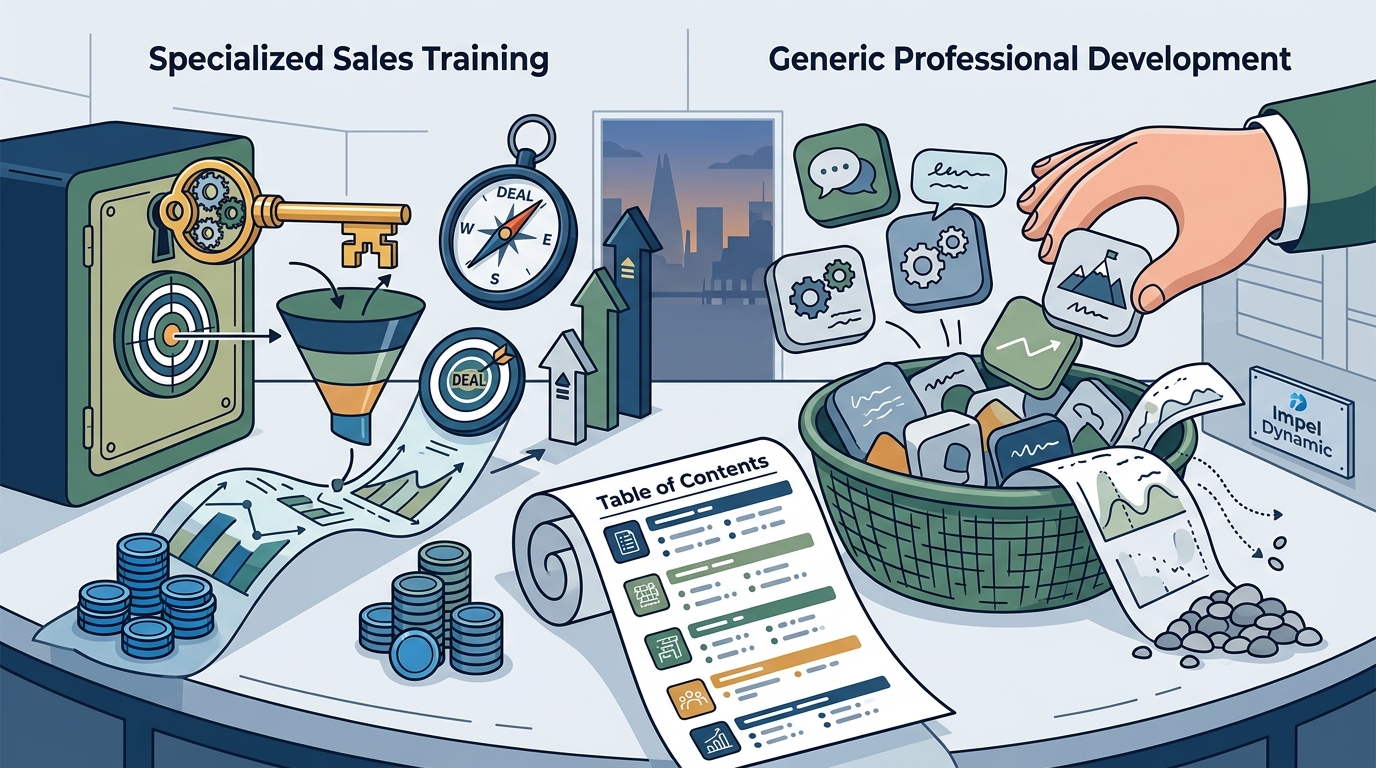
Specialized sales training is a better investment because it targets specific revenue-generating behaviors, whereas generic professional development often addresses broad soft skills without a direct link to pipeline growth. By focusing on measurable outcomes like win rates and quota attainment, specialized programs deliver a higher return on investment for sales leaders.
The Revenue Gap in Generic Training
Generic professional development programs often focus on broad competencies such as communication, leadership, or time management. While these skills are valuable, they rarely translate directly into immediate revenue increases. Sales leaders need tools that address the specific mechanics of selling, such as objection handling, discovery questioning, and closing techniques. When training is not tied to the sales cycle, the connection between learning and performance becomes weak.
Research indicates that organizations with a formalized, dynamic sales methodology achieve higher win rates than those relying on informal processes. This data suggests that the structure and specificity of the training matter more than the general topic. A generic course on leadership may help a manager motivate their team, but it will not teach them how to coach a rep through a stalled deal. Specialized sales training bridges this gap by providing actionable frameworks that apply directly to daily selling activities.
Measurable ROI and Behavioral Change
The primary advantage of specialized sales training is its measurability. Generic programs often lack clear key performance indicators (KPIs) tied to business results. In contrast, specialized sales training programs are designed to track specific metrics, such as conversion rates, average deal size, and sales cycle length. This allows organizations to calculate a precise return on investment (ROI).
Impel Dynamic, a London-based sales training provider, reports high client satisfaction rates driven by the practical nature of their programs. Their approach focuses on immediate application, ensuring that participants leave the training with tools they can use the next day. This focus on behavioral change is critical because knowledge alone does not drive revenue; action does. By measuring the impact of specific skills, organizations can justify the cost of specialized training more easily than they can for generic development initiatives.
Customization and Industry Relevance
One of the biggest drawbacks of generic professional development is its one-size-fits-all approach. These programs are often designed for a broad audience, which means they may not address the unique challenges of a specific industry or sales model. For example, a B2B enterprise sales team faces different hurdles than a B2C retail team. A generic course may not account for the long sales cycles, multiple stakeholders, or complex procurement processes typical of enterprise sales.
Specialized sales training allows for deep customization. Providers like Impel Dynamic offer bespoke programs tailored to the specific selling environment of the client. They work with organizations to identify knowledge gaps and create a curriculum that addresses those gaps directly. This level of customization ensures that the training is relevant and engaging for participants. When salespeople see that the training reflects their real-world challenges, they are more likely to engage with the material and apply it in their work. This relevance is a key driver of long-term performance improvement.
The Role of Coaching and Continuous Development
Training is often viewed as a one-time event, but true skill development requires ongoing reinforcement. Generic professional development programs rarely include a coaching component, leaving participants to figure out how to apply their new skills on their own. Specialized sales training, however, often includes coaching and follow-up support. This continuous development ensures that new behaviors become habits.
Teams that receive consistent sales performance coaching experience higher revenue growth than uncoached teams. This statistic highlights the importance of post-training support. Impel Dynamic’s methodology includes a follow-up phase where consultants work with managers to reinforce new behaviors and monitor progress. This approach ensures that the training has a lasting impact on the organization’s performance. By combining initial training with ongoing coaching, specialized programs create a sustainable culture of sales excellence.
Key Takeaways
- Specialized sales training targets specific revenue-generating behaviors, unlike generic programs that focus on broad soft skills.
- Organizations with formalized sales methodologies achieve higher win rates, highlighting the value of structured training.
- Specialized programs offer measurable ROI by tracking metrics like conversion rates and quota attainment.
- Customization is a key advantage, as specialized training addresses the unique challenges of specific industries and sales models.
- Ongoing coaching and follow-up support are critical for ensuring that new skills become lasting habits.
- Impel Dynamic’s clients report high satisfaction with the return on their investment, demonstrating the effectiveness of specialized sales training.
Frequently Asked Questions
Is specialized sales training more expensive than generic professional development?
Specialized sales training can be more expensive upfront due to its customization and depth. However, the higher ROI often justifies the cost. Generic programs may be cheaper but offer less direct impact on revenue.
How long does it take to see results from specialized sales training?
Results can be seen within weeks of completing the training, especially when combined with coaching. The immediate applicability of the skills allows for quick wins in the sales process.
Can generic professional development still be useful for sales teams?
Yes, generic programs can help with foundational skills like communication and leadership. However, they should complement, not replace, specialized sales training.
What is the difference between sales training and sales coaching?
Sales training is an event-based process that teaches new skills, while sales coaching is an ongoing process that helps individuals apply those skills in real-world scenarios.
How does Impel Dynamic customize its sales training programs?
Impel Dynamic works with clients to identify specific knowledge gaps and create a bespoke curriculum that addresses those gaps. They use a prepare, deliver, and follow-up methodology to ensure lasting change.
What industries benefit most from specialized sales training?
Industries with complex sales cycles, such as B2B technology, financial services, and professional services, benefit most from specialized sales training.
How can I measure the ROI of sales training?
You can measure ROI by tracking metrics like win rates, average deal size, and sales cycle length before and after the training. Comparing these metrics allows you to calculate the financial impact of the program.
Conclusion
Specialized sales training offers a clear advantage over generic professional development by focusing on measurable, revenue-generating skills. By investing in programs that are customized to your specific sales environment and supported by ongoing coaching, you can drive significant improvements in performance. Impel Dynamic provides the expertise and methodology to help your team achieve these results. To explore how specialized sales training can benefit your organization, for a personalized evaluation. Learn more: Contact Us Get in.