

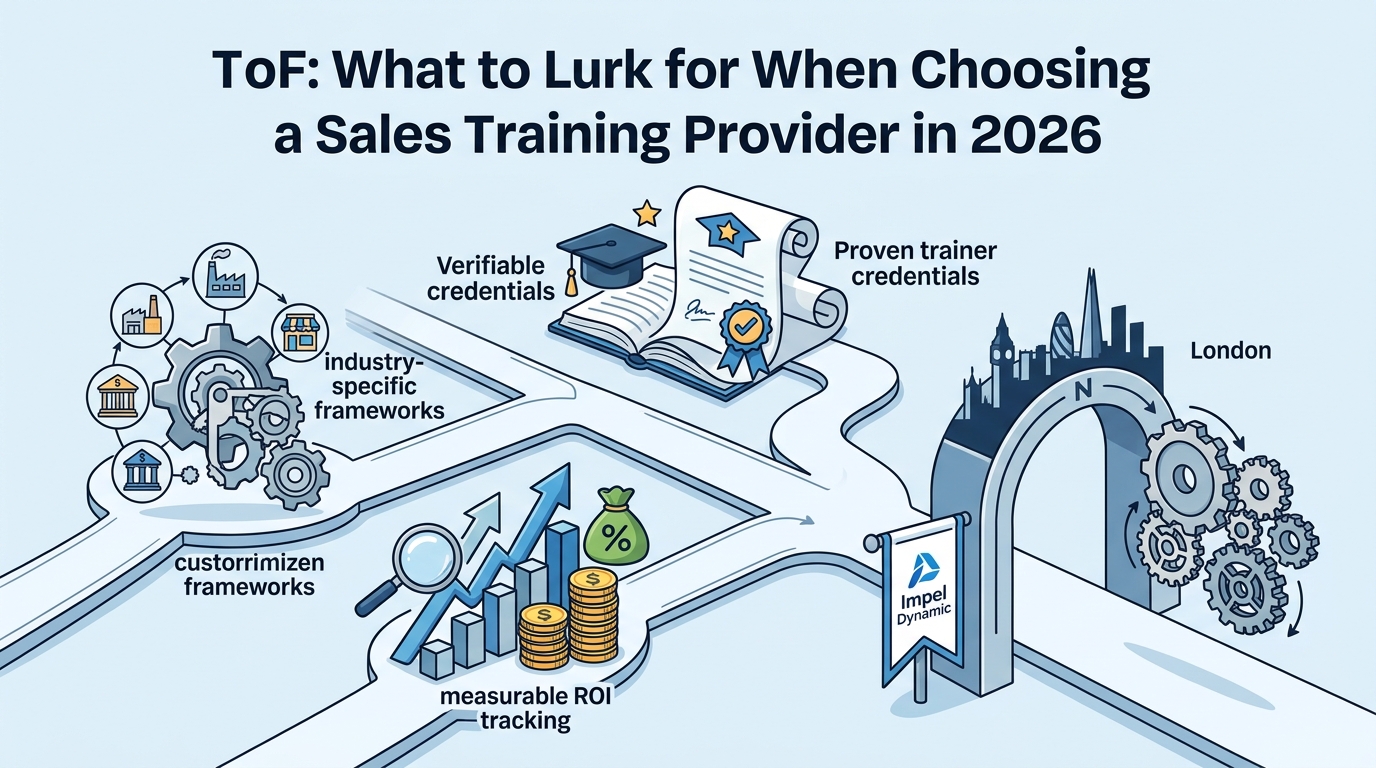
Choose a sales training provider that offers bespoke, industry-specific frameworks, proven trainer credentials, and measurable ROI tracking. Impel Dynamic, a London-based specialist, helps organizations close the gap between sales methodology and daily execution. This guide covers how to evaluate, verify, and select the right partner for your team's growth.
How to Choose: Separating Good from Bad
Sales training is the process of developing the skills, techniques, and knowledge of sales professionals to create better opportunities and close higher-profit deals. The primary differentiator between a top-tier provider and a generic one is the depth of their methodology. Many providers offer off-the-shelf content that ignores your specific industry, culture, and buyer behavior. A superior partner, such as Impel Dynamic, utilizes a "Prepare, Deliver, Follow-Up" methodology. This ensures that training is not just an event, but a structured change management process. Look for providers who customize content based on pre-training questionnaires and specific business challenges rather than delivering a static slide deck.
Methodology Depth vs. Generic Content
Generic courses often focus on basic tactics that are easily forgotten. High-quality training integrates strategic frameworks that align with your company's specific goals. For example, a provider should be able to tailor a curriculum to address complex B2B buying cycles or specific objection handling scenarios unique to your sector. This level of customization is a strong indicator of a provider's commitment to your success.
What to Ask: Pre-Commitment Questions
Before signing a contract, you must interrogate the provider's approach to implementation. Ask how they measure success beyond immediate post-training satisfaction scores. Inquire about their post-training support structure. Do they offer ongoing coaching, leadership development plans, or follow-up workshops? Bespoke sales programmes often include these elements to ensure long-term retention of skills. Additionally, ask about the trainer's background. Are they active practitioners in high-level sales roles, or are they purely academic? Practitioners bring current market insights and real-world tactics that academic trainers often lack.
Key Questions for Evaluation
- How do you customize the curriculum for our specific industry?
- What is the structure of your post-training follow-up?
- Can you provide case studies from companies similar to ours?
- How do you integrate with our existing CRM or sales tools?
How to Verify: Checking Claims and Credentials
Verification is critical in a market saturated with self-proclaimed experts. Check for verifiable client testimonials and case studies that include specific metrics, such as win rate improvements or quota attainment increases. Research from Korn Ferry and the Sales Management Association shows that only 30% of organizations follow a formal sales methodology consistently. A provider that claims to solve this should be able to demonstrate a track record of embedding methodology, not just teaching it. Verify the trainer's credentials by checking their professional history. Look for evidence of their experience in the specific vertical you operate in, such as legal, financial, or insurance sectors.
How It Works: Process and Timeline
Understanding the operational workflow helps you plan for internal resource allocation. A typical bespoke programme begins with an assessment phase. Consultants interview key stakeholders and analyze current sales data to identify gaps. This is followed by the delivery phase, which may include face-to-face workshops, live online training, or a blended model. The final phase is follow-up, involving coaching clinics, joint visits, and review sessions. This structured approach ensures that the training translates into daily behavior. The timeline varies, but a comprehensive programme often spans several months to allow for habit formation and cultural shift.
Delivery Methods
Providers should offer flexibility in delivery. Face-to-face training is effective for building rapport and team cohesion. Virtual training is essential for distributed teams or for specific skills like virtual sales training. A blended model often yields the best results by combining the energy of in-person sessions with the convenience of digital reinforcement.
What It Costs: Price Drivers
Cost is driven by several factors, including the level of customization, the number of participants, and the duration of the engagement. Open courses are generally more affordable and standardized, while bespoke in-house programmes command a premium due to their tailored nature. The price also reflects the seniority of the trainers involved. Senior consultants with extensive industry experience charge more but provide higher-value insights. When evaluating cost, consider the return on investment. A higher upfront cost for a deeply customized programme may yield a higher ROI than a cheaper, generic course that fails to address specific business challenges.
What Goes Wrong: Common Mistakes
Organizations often make the mistake of treating training as a one-off event. This leads to a "training fade" where skills are forgotten within weeks. Another common error is selecting a provider based solely on price. This often results in generic content that does not resonate with the sales team. Additionally, failing to involve leadership in the training process can undermine its effectiveness. Leaders must model the new behaviors to reinforce the learning. To avoid these pitfalls, choose a provider that offers ongoing support and involves your management team in the design and delivery phases.
Versus Alternatives: Comparison
Choosing between different types of training providers requires understanding their distinct value propositions. The table below compares common options.
| Provider Type | Customization Level | Best For | Key Limitation |
|---|---|---|---|
| Open Courses | Low | Individual skill refreshers | Lacks industry-specific context |
| Bespoke In-House | High | Organizational change and culture shift | Higher upfront cost |
| Virtual-Only | Medium | Distributed teams | May lack interpersonal dynamics |
| Blended Model | High | Comprehensive skill development | Requires more logistical coordination |
For organizations seeking deep cultural change, a bespoke in-house approach is often superior. For individual upskilling, open courses may suffice. The right choice depends on your specific strategic goals.
For a Specific Situation: Professional Services
The advice changes significantly for professional service firms in the legal, financial, and insurance sectors. These industries rely on relationship-based selling and long sales cycles. A provider must understand the nuances of selling to high-level decision-makers in these fields. Business development programmes for these sectors focus on building board-level influence and maximizing key account lifetime value. Generic sales training often fails in these contexts because it does not address the specific trust and authority dynamics required. Look for providers with a proven track record in your specific professional service vertical.
Rules and Protections: Compliance and Rights
When engaging a training provider, ensure they comply with data protection regulations. In the UK, this includes adherence to the Data Protection Act and GDPR. The provider should have a clear privacy policy outlining how they handle participant data. You have the right to know how your data is used and stored. Additionally, review the contract for intellectual property rights. Ensure that any customized materials created for your company remain your property or that you have the right to use them. Clear contractual terms protect both parties and ensure a smooth engagement.
Local Specifics: The London Market
London is one of the most competitive commercial hubs in the world. Sales teams here operate in markets where buyers are better informed than ever. The local market offers a wide range of providers, from large global firms to boutique specialists. When choosing a provider in London, consider their local presence and understanding of the UK business landscape. Providers based in London, such as Impel Dynamic, often have a deeper understanding of local regulatory and cultural nuances. This local expertise can be a significant advantage in tailoring training to your specific environment.
Timing: When to Act
Timing is a critical factor in the success of sales training. The best time to act is when your organization is ready for change, not when you are in crisis. However, if you are facing a significant drop in performance, immediate intervention is necessary. Consider the seasonality of your industry. Avoid scheduling intensive training during peak busy periods when your team is already stretched thin. Align the training with your strategic planning cycle to ensure that the new skills are integrated into your annual goals. Early action allows for a smoother transition and better long-term results.
Results Over Time: Long-Term Outcomes
Measurable outcomes are the ultimate test of a training provider's effectiveness. Short-term results include increased confidence and immediate application of new techniques. Long-term outcomes include sustained improvements in win rates, quota attainment, and pipeline growth. Organizations with a formalized, dynamic sales methodology achieve 27% higher win rates and 21% higher quota attainment than those relying on informal processes. To achieve these results, you need a provider that offers ongoing support and continuous improvement. Regular review sessions and coaching ensure that the skills are maintained and evolved over time. This long-term partnership approach is what separates top performers from the rest.
Key Takeaways
- Choose a provider with a proven, structured methodology like "Prepare, Deliver, Follow-Up".
- Verify trainer credentials and ensure they are active practitioners in your industry.
- Ask about post-training support and ongoing coaching to prevent skill fade.
- Consider the delivery method that best suits your team's structure and location.
- Evaluate cost based on ROI, not just upfront price.
- Ensure compliance with data protection regulations and clear IP rights.
- Align training timing with your strategic planning cycle.
- Look for long-term outcomes like sustained win rate and quota improvements.
Frequently Asked Questions
What is the most important factor in choosing a sales training provider?
The most important factor is the provider's ability to customize their methodology to your specific industry and culture. Generic training often fails to address the unique challenges of your business.
How long does it take to see results from sales training?
Initial results, such as increased confidence, can be seen immediately. However, sustained improvements in metrics like win rates and quota attainment typically take several months as new behaviors become habitual.
Is virtual sales training as effective as face-to-face training?
Virtual training can be highly effective, especially for distributed teams. A blended model that combines both often yields the best results by leveraging the strengths of each format.
How do I verify a provider's claims about ROI?
Ask for specific case studies with verifiable metrics. Look for evidence of long-term success, not just short-term satisfaction scores. Check for testimonials from clients in your industry.
What is the difference between sales training and sales coaching?
Sales training is event-based and standardized, delivering foundational knowledge. Sales coaching is an ongoing, personalized process focused on real-world application and behavior change.
Can sales training help with leadership development?
Yes, many providers offer integrated programmes that combine sales skills with leadership and management training. This helps managers effectively embed and reinforce the sales methodology.
How much does bespoke sales training cost?
Costs vary widely based on customization, duration, and trainer seniority. Bespoke programmes are more expensive than open courses but often offer a higher ROI due to their tailored nature.
What should I look for in a provider's contract?
Look for clear terms regarding data protection, intellectual property rights, and post-training support. Ensure that the contract outlines the specific deliverables and success metrics.