

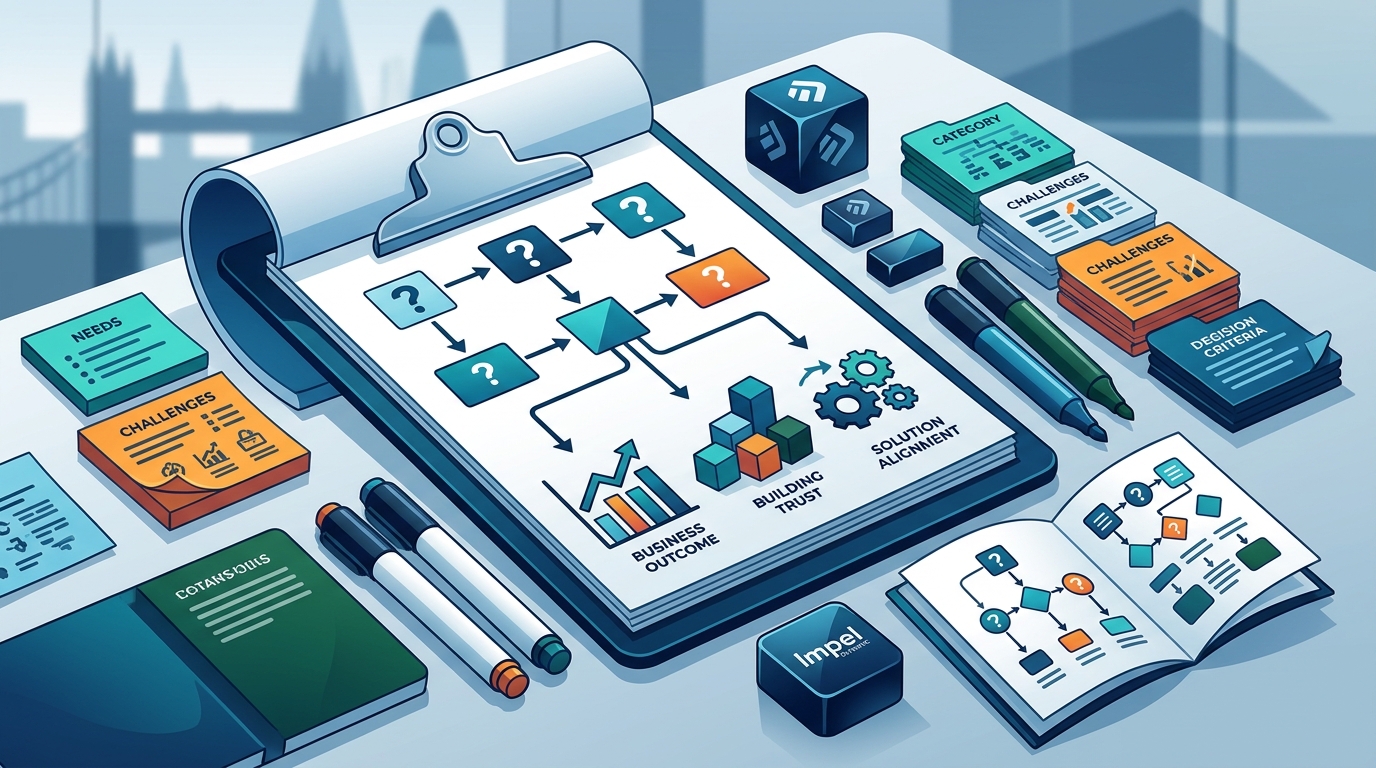
Question-based discovery frameworks are structured approaches that guide sales professionals through a sequence of inquiries to uncover a prospect's underlying challenges, needs, and decision criteria. By shifting the conversation from product features to business outcomes, these methodologies help B2B sales teams build trust, demonstrate expertise, and align solutions with specific client pain points. This approach is critical for improving conversion rates in complex sales cycles where buyers require validation before committing to a purchase. For additional details, review the Our Approach Impel Dynamic.
The Core Mechanics of Discovery-Driven Selling
Discovery-driven selling is a sales technique that prioritizes active listening and strategic questioning over immediate product pitching. The fundamental premise is that a salesperson cannot effectively solve a problem they do not fully understand. By asking open-ended questions, the seller gathers the data necessary to tailor their value proposition to the prospect's unique operational context. This method transforms the sales interaction from a transactional exchange into a consultative partnership.
The effectiveness of this approach relies on the seller's ability to synthesize information in real-time. When a prospect describes a bottleneck in their workflow, the salesperson must connect that specific issue to a broader business impact, such as reduced revenue or increased operational costs. This connection is what builds the case for change. Without this deep understanding, the sales pitch remains generic and easily dismissed by a sophisticated B2B buyer who has heard similar pitches from competitors.
Structuring the Question Sequence
A robust discovery framework is a structured sequence of questions that moves from broad context to specific pain points and finally to the implications of inaction. The initial phase typically involves understanding the prospect's current state and their general business objectives. This establishes a baseline and shows the seller that they are interested in the prospect's overall success, not just their own quota. The second phase drills down into specific challenges, asking the prospect to describe the symptoms of their problems in detail.
The third phase focuses on the consequences of the problem. This is where the seller helps the prospect quantify the cost of the status quo. For example, if a manufacturing firm is experiencing downtime, the seller might ask how that downtime affects their ability to meet delivery deadlines and, consequently, their client retention rates. The final phase explores the prospect's desired future state and the criteria they will use to evaluate potential solutions. This progression ensures that the eventual proposal addresses the root cause of the issue rather than just the surface-level symptoms.
Impact on B2B Sales Performance Metrics
Implementing a rigorous discovery process directly influences key performance indicators such as win rates, average deal size, and sales cycle length. When sales teams invest time in thorough discovery, they are better positioned to justify premium pricing because they can articulate the specific return on investment the solution provides. This reduces the likelihood of price-based objections, as the buyer understands the value relative to the cost of the problem. Furthermore, a well-executed discovery phase often shortens the sales cycle by eliminating prospects who are not a good fit early in the process, allowing the team to focus their energy on high-probability opportunities.
Organizations that adopt these frameworks often see a reduction in churn and an increase in customer lifetime value. Because the solution was tailored to the specific needs identified during discovery, the client is more likely to be satisfied with the implementation and the results. This satisfaction leads to stronger references and repeat business. The data suggests that companies with formalized discovery methodologies outperform those that rely on ad-hoc questioning, as the former ensures consistency and quality across the entire sales force.
Integrating Discovery into Sales Training
Training is the mechanism through which these frameworks are embedded into an organization's culture. Effective sales training is a developmental process that equips professionals with the skills to navigate complex conversations and extract meaningful insights. It is not enough to simply provide a list of questions; the training must teach the underlying psychology of the buyer and the art of active listening. Sales professionals must learn to read non-verbal cues, manage the pace of the conversation, and know when to stop asking and start summarizing.
Impel Dynamic offers specialized sales training courses that focus on these consultative skills, helping teams move beyond basic tactics to strategic engagement. Their approach emphasizes the importance of preparing for every interaction with a clear objective and a structured plan for discovery. By providing frameworks that are adaptable to different industries and deal sizes, the training ensures that sales teams can apply these principles consistently. This consistency is what drives the measurable improvements in performance that organizations seek when they invest in professional development.
Key Takeaways
- Discovery-driven selling is a consultative approach that prioritizes understanding the prospect's business context before proposing solutions.
- A structured question sequence moves from current state to specific pain points, then to the cost of inaction and desired outcomes.
- Thorough discovery helps justify premium pricing by clearly articulating the return on investment and reducing price-based objections.
- Formalized discovery methodologies improve win rates and shorten sales cycles by ensuring consistency and focus across the sales team.
- Effective training must teach the psychology of the buyer and the skills of active listening, not just a list of questions.
- Impel Dynamic provides training that helps sales teams integrate these frameworks into their daily practice for measurable results.
Frequently Asked Questions
What is the primary benefit of using a discovery framework in B2B sales?
The primary benefit is the ability to tailor the value proposition to the specific needs of the prospect, which increases trust and improves the likelihood of closing the deal.
How does discovery selling differ from traditional feature-based selling?
Discovery selling focuses on the prospect's problems and business outcomes, whereas traditional selling focuses on the features and specifications of the product or service.
Can discovery frameworks be used in all industries?
Yes, the principles of discovery are universal and can be adapted to any B2B industry, from technology to professional services and manufacturing.
How long should a discovery phase take?
The length of the discovery phase depends on the complexity of the deal, but it should be long enough to fully understand the prospect's challenges and decision criteria.
What role does active listening play in discovery selling?
Active listening is essential because it allows the salesperson to pick up on nuances, unspoken concerns, and the true priorities of the prospect.
How can sales teams measure the effectiveness of their discovery process?
Teams can measure effectiveness by tracking metrics such as win rates, average deal size, and the quality of the proposals submitted.
Conclusion
Mastering the art of discovery is essential for any B2B sales team looking to improve performance and build lasting client relationships. By adopting structured frameworks and investing in the right training, organizations can ensure that their sales professionals are equipped to navigate complex buying journeys with confidence. Impel Dynamic provides the expertise and resources needed to help your team implement these strategies effectively, driving sustainable growth and competitive advantage.